

Jessie Tracy has been working in B2B tech for over 20 years, advocating for the craft of creative that can drive accountable performance excellence and was the previous CEO of the marketing agency Velocity Partners. She's evangelical that the best results come from a true client and agency partnership.
View Jessie Tracy’s postsPublished in:
20 mins read
Eight story arcs that shape almost every B2B narrative
Most B2B brand narratives are one of eight arguments in a different jacket. Here's the logic of each, and how each one goes wrong.
A B2B story arc is the argument underneath a brand narrative: the sequence of claims that takes a buyer from how things are to why they should buy, with the adjectives taken off. Most B2B narratives rest on one of the eight story arcs below.
Okay so – let me start by saying, no two brand narratives I’ve created or read have ever been exactly the same. (I swear…)
But it’s weird how many of them seem to stem from what feels like a handful of common argument structures, once they get broken down into their fundamental logic.
I’ve been playing this game for a while now and so far I’ve identified eight very different story arcs that seem to underlie most B2B narratives – whether that’s high-level brand narratives or more granular pieces of content, like eBooks, blog posts, infographics and so on.
I thought it’d be helpful to detail them here today, along with a few tips on how to get them right – based on the times I’ve seen them go very wrong.
For example, if you’re struggling with your own story, it might be because you’re trying to do two of them at the same time, or because you’re missing a killer step in one or the other.
Once you’ve gone through them all I’d love to know which ones are your favorites and why, and most importantly – if you think I’ve missed any. I’m sure the eight I’ve identified aren’t the only eight B2B arcs out there.
The one where you’re the best of both worlds.
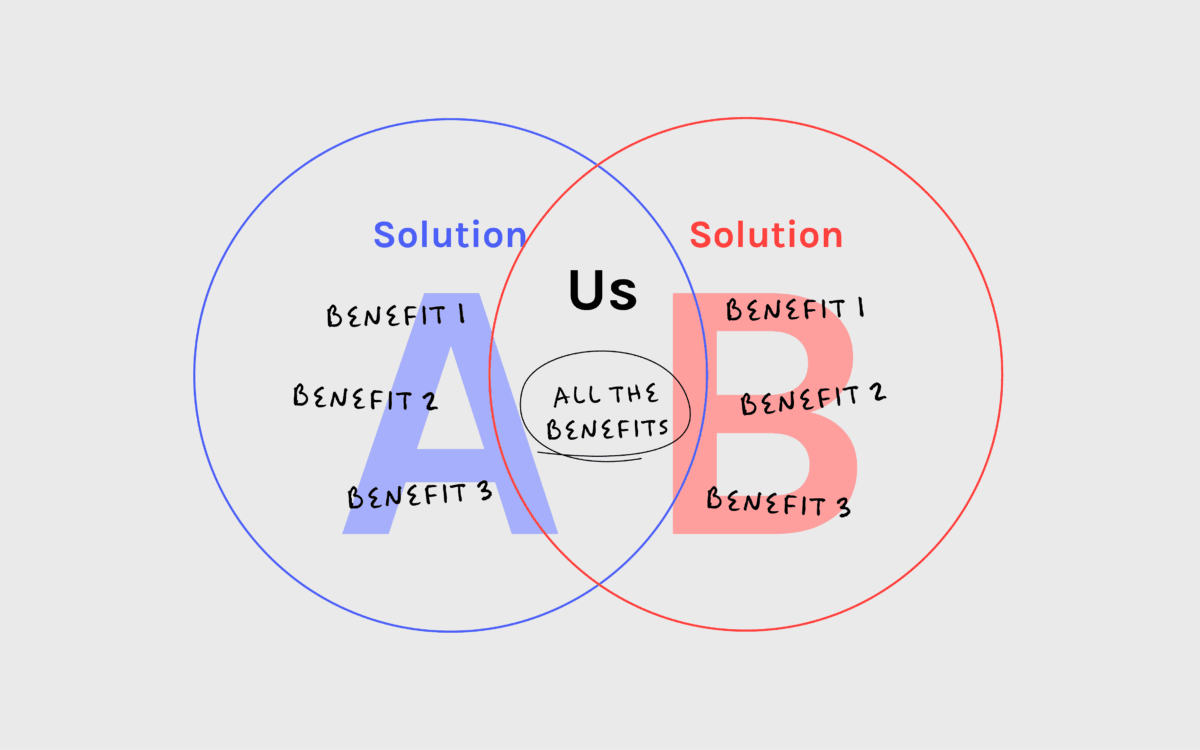
Let’s start with the most classic B2B narrative – the one where you give customers the benefits of two (or more) solutions combined, so they no longer have to make compromises on what they get out of their investments.
The logic goes:
*In this case [z] is the reason that the trade-off has been broken – for example, it could be an innovation that’s enabled self-service, or rapid scaling, or something else that was never possible before.
The pitfalls:
This is a very low-risk story arc from a tangibility standpoint. But one thing to avoid is ‘listifying’ this type of story. I’ve seen a lot of brands try to cram all the benefits into their writing at every opportunity, which leads to lines like, “We help businesses around the world to work more efficiently, spend less money, make their employees happier, and have less of an environmental impact – for low cost.” That’s way too many concepts for an audience coming in cold to digest – and it makes the story sound too good to be true, like there must be some sort of catch.
Another pitfall to avoid is criticizing the competition too much – the logic of this story has all the ‘convincing’ power you need, so adding in a point like, “Oh and btw, solution A sucks” will just make the story sound bitter – or even worse, threatened by competition that’s supposed to be inferior.
An example: Tableau: The #1 BI Software “We make analyzing data fast and easy, beautiful and useful.”
Why it works: Brands used to have to choose between more sophisticated but ugly analytics tools, and more primitive tools that looked good. With Tableau, they can get both. Simple as that. No wonder they’ve got majority market share.
Databricks tells the same story today. Its lakehouse page says the architecture “combines the best elements of data lakes and data warehouses”, which is this entire arc in one clause.
The one where you’ve spawned a new era.
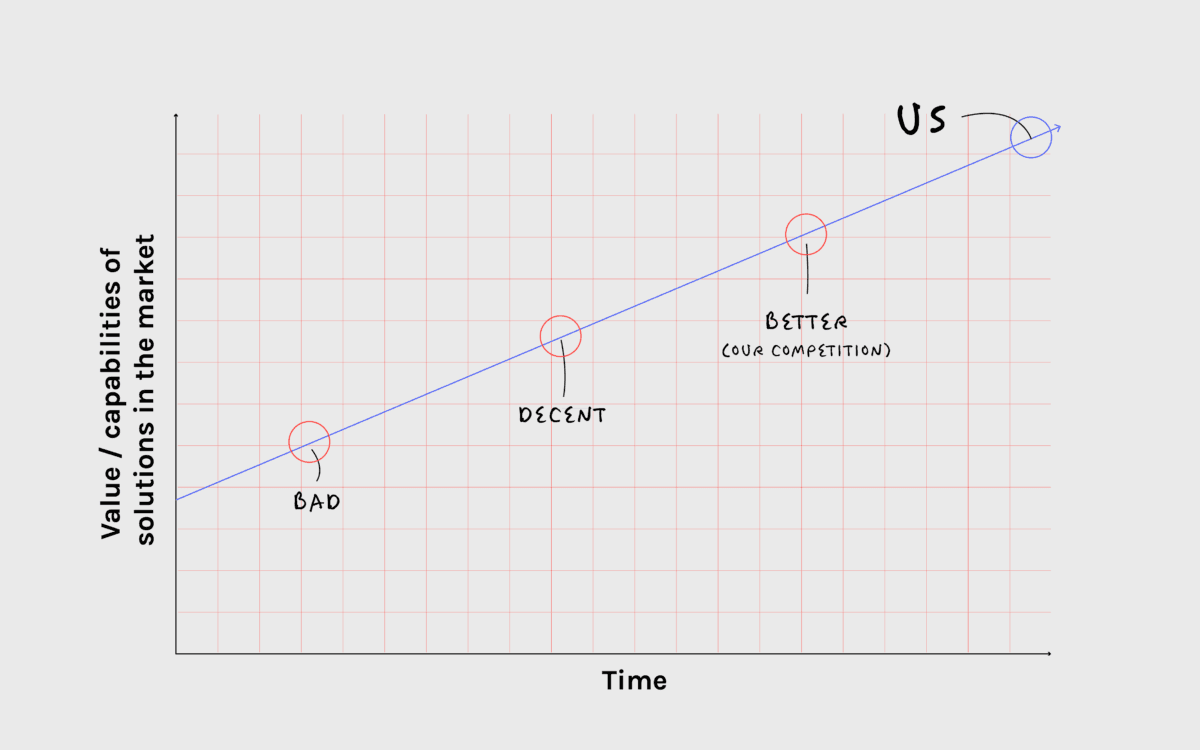
This is a perfect arc for brands that center around AI or big data – where the development of available solutions (and their associated benefits) tends to accelerate over time like compound interest. It’s also a clean, tangible way of standing out from the competition – without having to throw massive shade.
Narrative structures like these also make for great overarching campaign themes, where you can center multiple stories around a new, fresh, exciting time that everyone and their mom should want to be a part of. The logic goes:
The pitfalls: Of course, any brand that tells this kind of story does actually need to be a leap ahead of its competitors to make the logic effective. And it needs to be fundamentally changing the rules of the ‘world’ that it’s ushering into the new era. For example: Salesforce actually changed the buying paradigm with cloud, they didn’t just offer ‘Siebel but better’.
There’s also the risk of sounding a bit…cringe. For example, we all know at least one business that centers its narrative around “[industry name] 4.0” or “[X-driven] digital transformation”. When you break those concepts down, they don’t actually say much – “4.0” really just means “the next one”. And “digital transformation” isn’t a very unique spin to promote in 2020 – it’s been done to death. In 2026, “AI-first” is doing the same job.
Instead, the most effective versions of these story arcs coin something unique, and something practical – say, a specific approach to problem solving, or a new product category that’s just been created. That’s what’ll get a brand associated with a new era.
An example: Zuora: unifying order-to-cash for a dynamic subscription world. “The subscription economy is here. The way we do business has fundamentally changed.”
Why it works: To pull this story off, Zuora used data to prove the point that customers were demanding new consumption models, rejecting traditional ownership, and spending more on subscriptions than ever before – the perfect backdrop for introducing the dawn of the ‘subscription economy’. Notice how subtly smart the arc is though: they took something inevitable (which they proved with data), but by coining it, made people believe it was something they spawned (when they actually just helped brands deal with it).
*Shoutout to Andy Raskin who’s written a great post on why Zuora’s story works so well
The live experiment is Salesforce’s Agentic Enterprise. In October 2025 Marc Benioff announced “the age of the Agentic Enterprise”. Forrester’s review of Dreamforce 2026 called it Salesforce’s “most complete vision yet”, then wondered whether it “could become a collection of loosely integrated products”. You can announce a new era whenever you like, and buyers will go and check whether it has arrived.
The one where you break down silos for the first time.
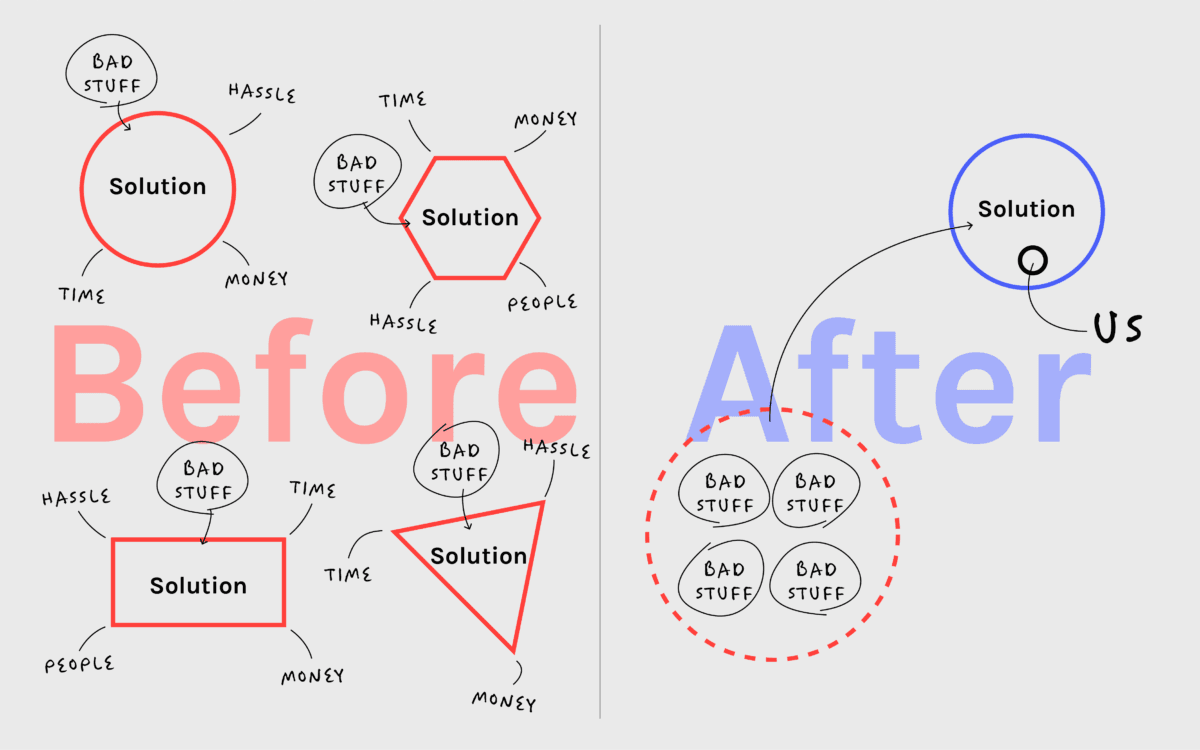
This one’s a little more complicated than the last two, but it’s still an effective story arc. In a nutshell: you’ve got a whole bunch of prospects out there fighting fires in silos – with each department using a different solution, and none of them communicating.
Over time, they’ll have wound up duplicating their efforts, wasting their money, getting piecemeal insights that don’t speak the same data language…you get the picture. It’s one big, clunky, wasteful mess.
So far, no one’s been able to bring these siloed efforts together. Then here you come along with a shiny new way of doing things that tackles everything in one go (with the added simplicity that they’ve now got fewer vendors to deal with).
The logic goes:
The pitfalls: The biggest one is that it’s very easy to sound condescending when you’re telling people they’re doing something wrong. I’ve seen this play out badly a couple of times where brands have led with, “STOP DOING THINGS IN SILOS, IDIOTS!” type messages. The truth is, people know they shouldn’t be tackling problems in silos, what they want to hear is how to break them down without wreaking havoc.
The second pitfall to be conscious of is that breaking down silos is only half a story – it’s also critical to play to the upshots. For example, does smashing silos mean customers can do things faster? Does it mean they can save money? Does it mean they can get more holistic insights across the business? Does it mean they can scale more easily? Whatever the upshots, those should be front and center of this type of story, rather than something tacked on at the end.
An example: Salesforce: the world’s #1 CRM platform “Extend and enhance the world’s #1 CRM platform with these unified services.”
Why it works: Salesforce’s narrative is the epitome of this kind of arc, and it’s a strong one at that – because they really can unite marketing, sales, commerce, service, and IT teams with one CRM platform….that’s a hell of a lot of silos smashed. Plus, work itself is increasingly crossing silos, so any technology that does the job of ‘synthesizing’ others (like Salesforce) is fuel for a great, timely story.
Atlassian’s System of Work is the version to read in 2026, and at no point does it call anyone an idiot. It says “technology and business teams need a shared way of working” and goes straight to the upshots: goals visible across all teams, and a shared understanding of the “who, what, when and how”.
The one where you’re super niche.
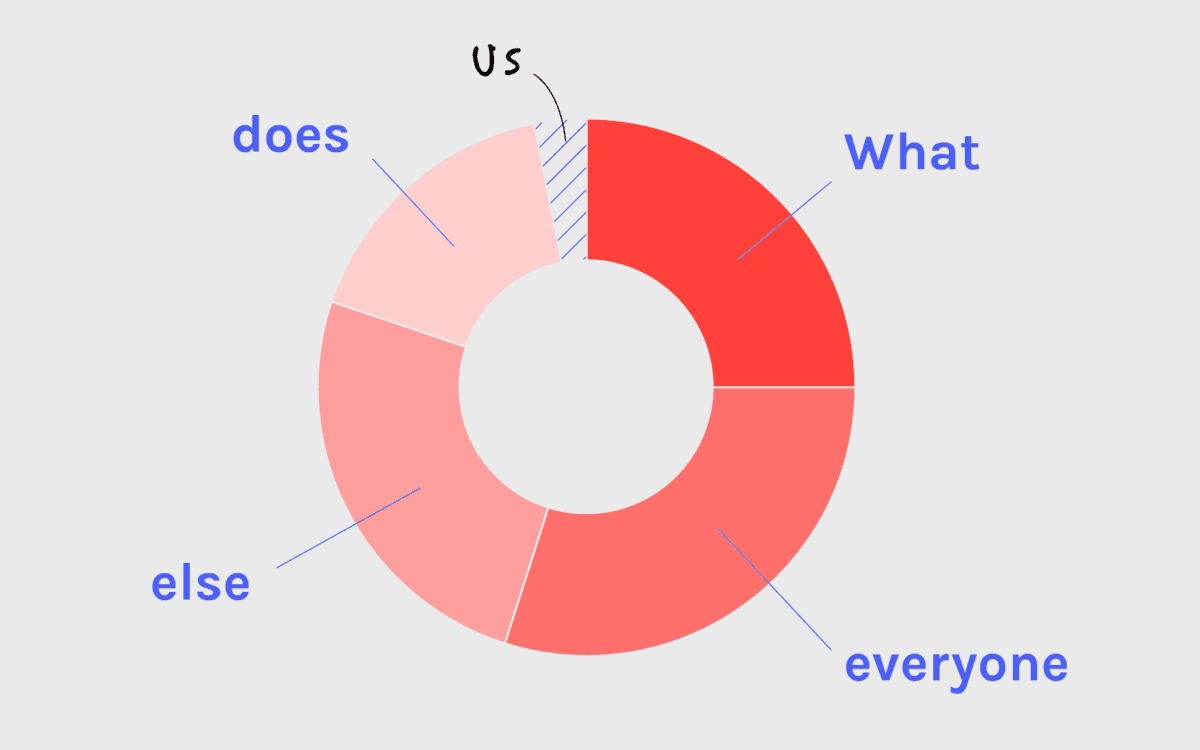
Some brands think having a limited solution focus or restricted amount of domain expertise is a weakness.
But frame it in the right way and you can actually convey a significant, unique advantage.
Say you’ve been around for 15 years and so has your biggest competitor. While you’ve remained focused on solving problems in one industry, your competitor has broken into all the verticals. That competitor is now the market leader. What’s your next move? Criticizing the competition? Tailoring your marketing for verticals you know nothing about in an attempt to catch up?
How about playing to your strength: you’ve been focused on one thing for 15 years – that makes you a specialist. And that’s a seed for a great story.
The logic goes:
The pitfalls
It’s important to get the balance right with this one – some brands talk way too much about how their biggest competitor caters to ‘everyone’. Some even make reference to their competitors’ hefty market share (yes, really). That puts them at massive risk of accidentally promoting the competition.
Instead, if you’re gonna use this arc, focus almost entirely on your niche: you understand your prospects, you know their world inside out, you’ve encountered the same challenges they’re facing today, you know exactly what it takes to solve them better than anyone else.
Keep reassuring your audience of those things (in-jokes and audience-specific jargon are great tactics for this) and you won’t go wrong.
An example: Monterro: turning Nordic software companies into global players. “Monterro invests in and develops Nordic software companies. That’s it.”
Why it works: Monterro’s niche narrative is a great one as it includes a regional niche, an industry niche and a customer-growth-stage niche. Anyone who fits their target demographic would be hard pressed to not see them as a best fit.
Veeva is this arc at full commitment. Its homepage opens with “The Industry Cloud for Life Sciences”, and it quotes hours saved “across enterprise MLR” without stopping to say what MLR stands for. If you need it explained, you’re not the customer, and Veeva seems fine with that.
The one where you make people realize they want the wrong things.
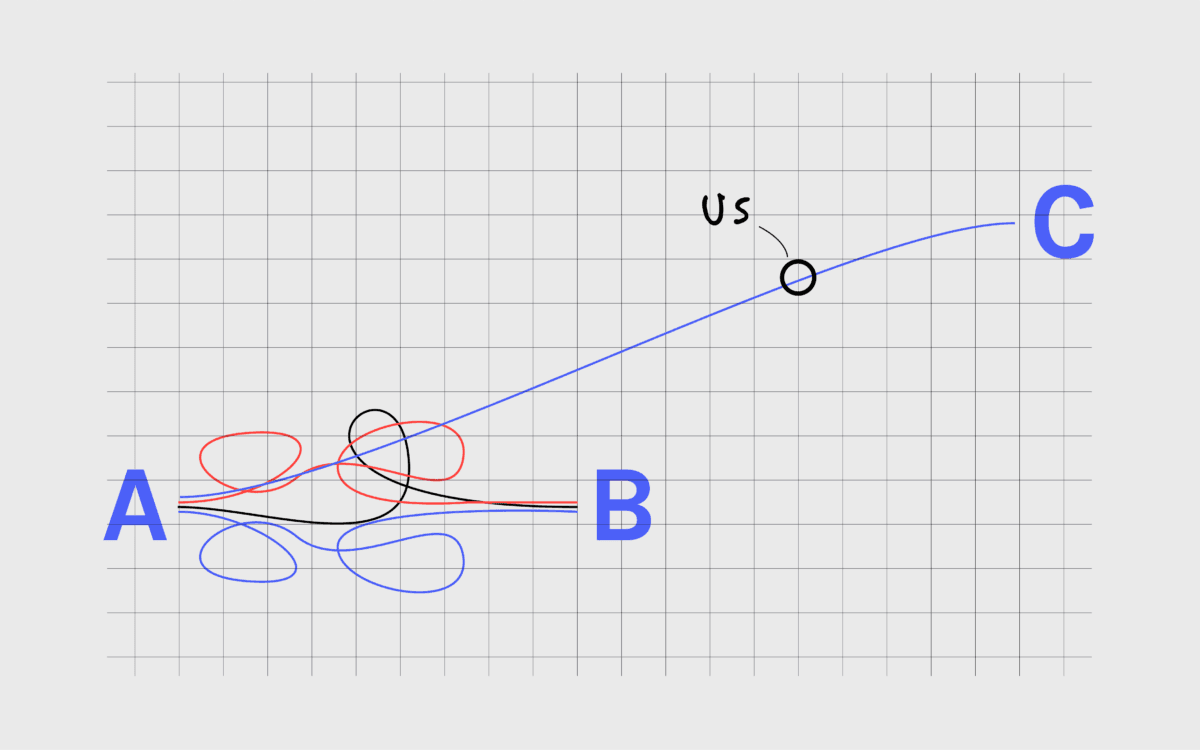
Henry Ford said it best: “If I had asked people what they wanted, they would have said faster horses.” Except that, as far as anyone can prove, he didn’t. The Henry Ford museum says the line “has never been satisfactorily traced” to him, and Quote Investigator’s earliest link between the saying and Ford dates from 1999, 52 years after he died. (We repeated it here in 2020. Our apologies to the horses.)
Fake or not, that’s the epitome of this kind of story. The idea is that everybody thinks they need to get to a certain endpoint – but you (unlike your competitors) see more potential. You see a journey that doesn’t just end in your customer catching up with the rest of their market, but going somewhere totally different.
The logic goes:
Another version goes:
The pitfalls:
The obvious one is that it’s hard to tell people to want something different from what they actually came for.
It’s why stories that use this arc should always do three critical things: first – explain why what people want isn’t good enough. Second, explain why people still think option B is best (for example, it’s the ‘easy’ way, or it leads to quick wins). Third, that it tells people why C is a ‘must’ rather than a nice-to-have.
And of course, it’s critical that ‘C’ is actually a different thing from ‘B’ – the story won’t work if ‘C’ is just ‘B but slightly better’.
An example: Entrepreneur First: Find a co-founder Ambitious people are encouraged into prestigious corporates and slow, steady progress, which “puts an artificial limit on what they can achieve”. “We exist to remove that limit.”
Why it works: Right from the get-go EF are introducing their audience to a destination they didn’t even know existed – a place where people can bypass the traditional methods of forming a business and get access to the best candidates, and get support in launching that business. They knew people wouldn’t automatically come looking for those benefits, so by telling the story in this way, they’ve both pulled prospects in with what they thought they wanted, and introduced prospects to a ‘better way’ with a convincing argument.
Ramp does all three of those critical things. Corporate cards competed on points, and the more you spent the more you got. In an October 2025 Fortune interview, co-founder Eric Glyman argues that issuers work to devalue those points and that interchange can’t fund much more than a 2% rebate, and Ramp says it cuts customers’ expenses by more than 5% a year (the company’s own figure). Ramp’s C is a smaller bill, which is a different thing from a bigger pile of points.
The one where you stop people boiling the frog.
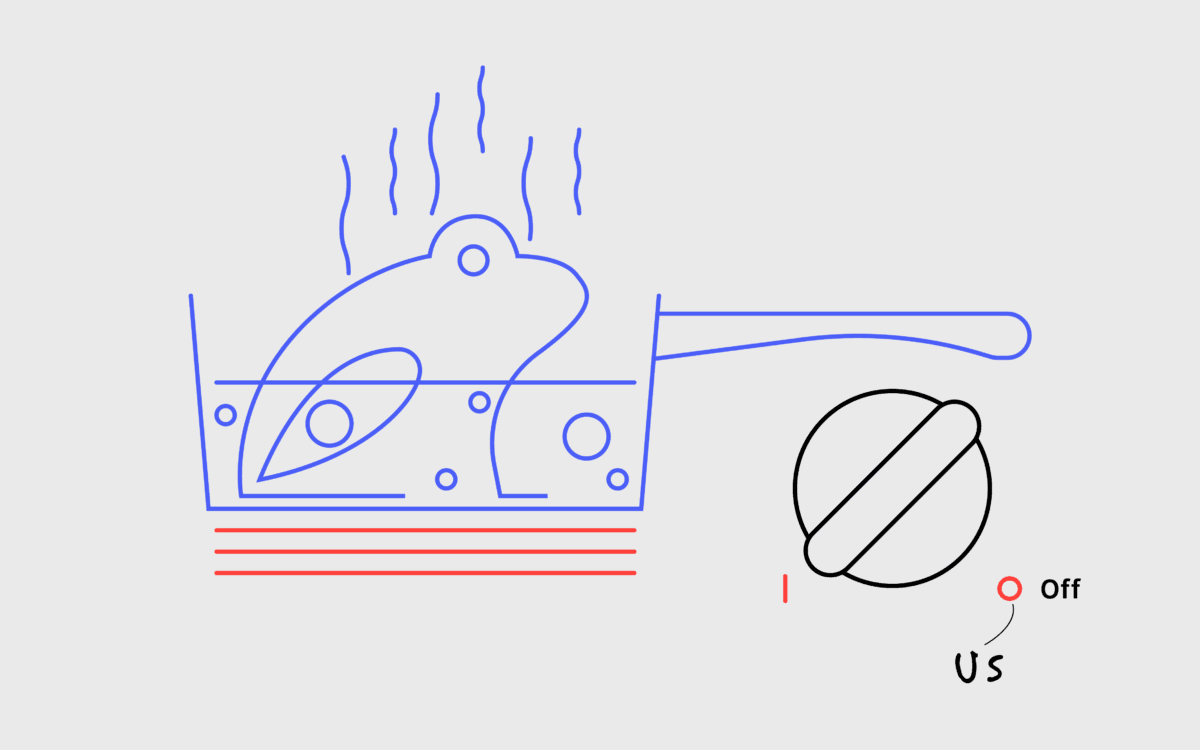
This is a great arc for brands whose offerings center around security (say, network security or inventory management) but it’s effective in other areas too.
The idea is: your prospects have been stewing on a problem for so long that they haven’t noticed it heating up. Sooner or later, that problem’s going to boil up into a crisis – one that could cost a business time, a hefty chunk of its budget, or worse, its reputation.
The logic goes:
*Fun fact: this is actually about the old-school problem of induction. Someone witnesses the same thing happening over and over again, so they expect the same results in the future. In this case that person is the customer: seeing a problem being dealt with over and over again, so assuming it can always be dealt with. This is the thought pattern you need to break.
The pitfalls:
Convincing a prospect that they need to be concerned about a crisis that hasn’t happened yet is hard. It’s why it’s critical to paint a very clear (and believable) picture of the costs of doing nothing – one that will resonate with the actual buyers of the solution, who might have a million other things on their radar (and be quite comfortable doing nothing).
One great trick brands use to make this kind of story as powerful as possible is to coin the problem, as one united concept, rather than constantly referring to a long list of interconnected issues. This gets people associating the ‘meta’ problem directly with the brand, and if it gets adopted widely enough, it means other brands have to start using it, with the initial brand becoming the ‘pioneer’ of that category of problem solving. (Geoffrey A. Moore’s ‘Crossing the Chasm’ is a great example of this.)
One last tip based on the best ‘frog boiling’ stories I’ve seen in this space – when you tell this story, don’t let it conclude with doom and gloom. Always play to the upshots – whether that’s something saved or something gained (or both). You’ll still get all the same logic into the narrative, but you’ll set up a story of hope instead of futility. And, more importantly, for prospects who are skeptical of how big a problem they actually have, playing to the upshots will give them something else to want to put money behind.
An example: Continuity Software: Proactive prevention “Chaos or control? Take charge and manage the resilience of your mushrooming cloud environments.”
Why it works: The story starts with a comparison between what IT environments looked like 10 years ago versus what they would look like by 2023 (spoiler alert: very different). The story then makes it clear that if businesses aren’t ready for the world described in 2023 (i.e. if they don’t take a ‘proactive’ approach today), things will very quickly descend into a costly, risky fight against compounding chaos. One of the keys to this story being effective is the granular detail it goes into when describing exactly why 2023 would be so bad – it’s not just a few fluffy claims, but a super believable, well-researched, fleshed-out breakdown of all the complexities that’ll be integral to (or brought about by) tomorrow’s infrastructure.
Post-quantum cryptography is the best frog story in B2B right now, and Cloudflare tells it well. The heat is real: NIST’s final transition report, published October 27, 2026, says today’s quantum-vulnerable public-key algorithms are deprecated after 2030 and disallowed after 2035. Cloudflare’s page says the industry treats Q-Day “as a 2030 problem” while attackers stockpile encrypted data now to crack later, and then comes the upshot: “Skip the costly rip-and-replace hardware cycles.”
The one where you give your customers’ customers what they really want.

In a B2B space it’s easy to default to a technical argument rather than one that revolves around the end customer going from ‘sad’ to ‘happy,’ or ‘unproductive’ to ‘innovative’, etc. But that’s actually the biggest reason why stories centered around people are so effective in a tech context. They stand out because they go against the grain, and they compel because they go straight to the heartstrings. They give people something to relate to.
The logic goes:
The pitfalls:
Even though the idea is simple, it’s a tricky one to get right – because it’s very easy to cross the line into sounding fake or gushy. “We’re leading the charge for a happier, more productive world, one on-premise server at a time” ain’t gonna cut it. It’s why the only brands who should tell these kinds of stories have to be the ones who can actually differentiate on CX, UX or UI.
An example: OpenMarket: The Empathetic Interaction “It’s about putting yourself in their shoes and solving their problems…”
Why it works: Compared with other mobile messaging providers and aggregators who stick to feature-led marketing, OpenMarket puts the sole focus on what people actually want from communication, at the highest level. This has given them a tangible, relatable, emotive story (on top of a tech story) that, for those reasons, resonates well.
Linear is the one to read today. Issue trackers are not short of features, and Linear’s argument was about how it feels to be the engineer stuck using one. Sequoia’s 2023 profile (Sequoia is an investor, so salt to taste) calls the product “a rebuttal to Jira”, which it describes as “exhaustively customizable in a way that some engineers find onerous”.
The one where you have the ‘ultimate toolbox’ for every single one of your customers.
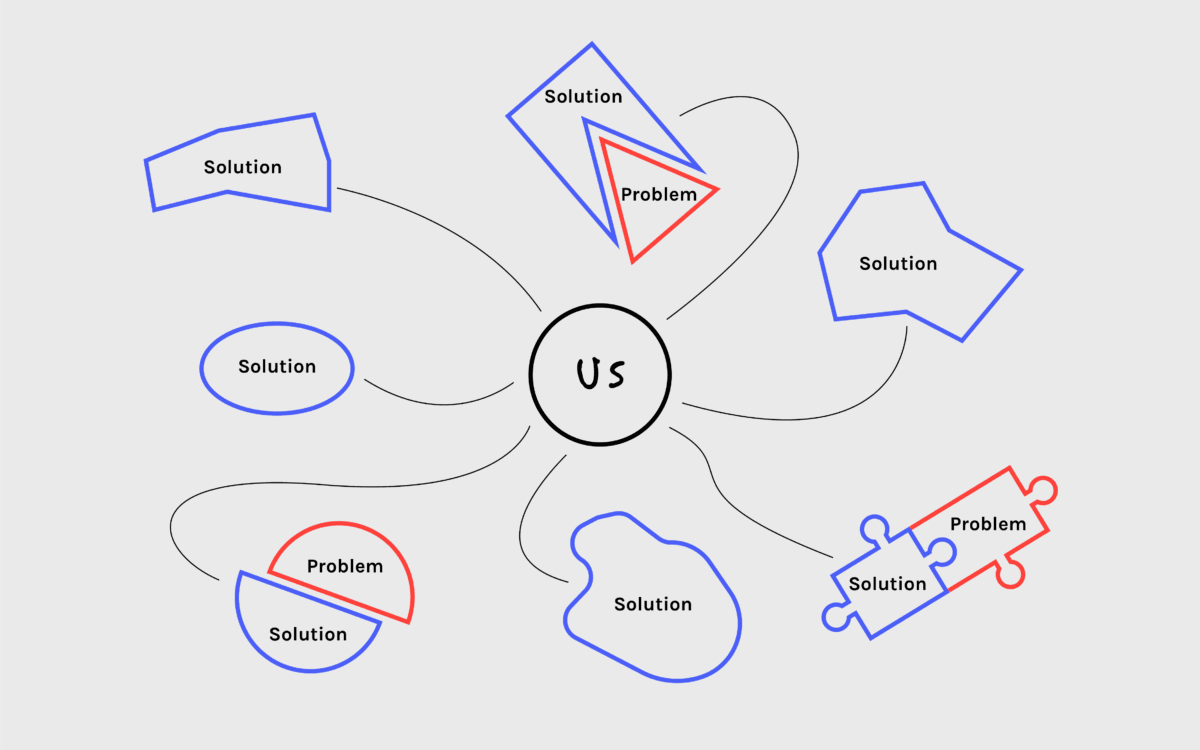
This is a story about precision. It’s about being able to deconstruct ‘meta’ solutions, so you can solve customers’ problems in exactly the right ways on a micro-level. It’s perfect if you’re, say, a multi-cloud platform reseller who can provide (or combine) piecemeal solutions based on specific goals or requirements, rather than locking your customers into one vendor who may only have one solution that’s a perfect fit.
The logic goes:
The pitfalls:
The worst examples I’ve seen of this story are when brands don’t sell customers on exactly how they mix and match solutions well. It’s critical that they explain why their methods (or people) are uniquely placed to do so, otherwise the whole argument falls flat.
Another pitfall I’ve noticed is that when brands have extremely broad, exhaustive offerings, they can end up sounding like a burden on their customers – like their customers will have to navigate through all the ‘micro’ solutions themselves, or that the different solutions they end up with won’t be compatible with one another. It’s why simplicity is a critical element to center this kind of story around.
Support is also a key element in a story like this if it’s being told by a reseller – as an audience may worry that by not going directly to the original vendor, they’ll miss out on certain services, or be at greater risk.
An example: Cloudreach: Offset the impact of uncertainty “We translate infinite opportunity into precise choreography…”
Why it works: Cloudreach immediately relieve the potential customer anxiety of having to find micro-solutions themselves with the words “precise choreography”. This puts the burden back on Cloudreach, while the rest of the story nicely executes the ‘ultimate toolbox of solutions for each customer’ message, always centering around the theme of precision.
Amazon Bedrock tells this story for AI. Its model choice page is headed “Match your AI workloads to the perfect model every time” and promises “access to hundreds of top foundation models”. Hundreds of models is exactly the burden problem, so AWS immediately adds built-in evaluation tools to “compare and balance performance, cost, and accuracy”.
How do story arcs work across a buying group?
A story arc has to survive contact with a whole buying group, which is where good ones often break. Pretzl’s 2026 Buyer Group Index, with the ANA and NewtonX, surveyed 200 senior go-to-market leaders and ranked persona messaging, tailoring messages to each role in the group, third most important of 28 practices. Connected touchpoints, one consistent story across website, ads, sales conversations and demos, ranked eighth. Both scored only medium for performance, in the 60 to 69.9 band. In practice that means one arc and several openings: a silo story keeps its logic from the CIO’s deck to the end user’s onboarding email, but the CFO’s version starts with duplicated spend.
Right. slaps knees
So these are eight of the most common B2B story arcs that I’ve seen in the last few years. Hope you’ve enjoyed exploring them. But I’m sure there are way more out there – so if you know of any I’ve missed, or even better: if you’ve created a story arc that isn’t in this list, do please share it with us.
P.s – All the images in today’s post were created by Senior Designer Ollie Rone-Clarke. Check him out. He’s dope.
Untangling a narrative that’s trying to be three of them at once is a good part of what Pretzl’s brand and communications teams do all day.
Common questions
How many story arcs are there?
Six, if you’re counting emotional shapes in fiction, and eight, if you’re counting the argument structures behind most B2B narratives. A 2016 study in EPJ Data Science analyzed 1,327 Project Gutenberg stories and found six core emotional arcs. The eight B2B arcs in this article are a practitioner’s list, so treat eight as a working number.
What is the difference between a story arc and a brand narrative?
A story arc is the logic, and a brand narrative is the finished story built on that logic. The arc is the sequence of claims, such as “you used to have to choose, and now you don’t”. The narrative adds the company’s own proof, language, characters and point of view. Two competitors can share a story arc and still tell very different stories.
Can a B2B brand use more than one story arc?
Yes, but one per story. A company can run a new-era arc at brand level and a boiling-frog arc in a security campaign, because they’re separate stories for separate moments. Trouble comes when one deck or page tries to do both, since each arc asks the reader to believe something different about where they are today.
More of this in your inbox

Emma LangleyOriginal author
Published in:
Subscribe to our updates.
Get fresh marketing insights rooted in customer science to help you stay ahead.
Relatedcontent

Beyond the briefing: how the best technical media conversations build lasting B2B credibility
Discover how technical media conversations at Pretzl Connect helped sharpen company narratives, inspire useful content and build lasting credibility in B2BRead more

From Leads to Buying Groups: The Next Evolution of B2B Marketing
Why buying group marketing is fundamentally changing the way we go to market, personalise experiences and measure success.Read more

Is Germany ready to sell to today’s buying groups?
How German GTM organizations are adapting to modern B2B buying groups.Read more