

Jessie Tracy has been working in B2B tech for over 20 years, advocating for the craft of creative that can drive accountable performance excellence and was the previous CEO of the marketing agency Velocity Partners. She's evangelical that the best results come from a true client and agency partnership.
View Jessie Tracy’s postsPublished in:
12 mins read
Honest marketing: six examples of brands showing their worst side
What Avis, a very bad hotel and a Chicago spirit compared to back sweat can teach a B2B brand about admitting what's wrong with it.
Honest advertising is marketing that names a real weakness in what you sell and makes that weakness part of the reason to buy. These honest advertising examples run from 1962 to 2025.
Insane Honesty in content marketing
Marketers are trained to put their best foot forward and ignore the downsides of their products. This is about doing the exact opposite: finding your weakest points and showcasing them for all to see.
If you like the idea, this post has quick stories from brands like Avis and Volkswagen and even a dirty, cramped budget hotel in Amsterdam.
And I did a talk on this at Inbound, the Hubspot event.
You’ve read the Insane Honesty pitch.
(If you haven’t, it’s just up there.)
Now here are the honest advertising examples.
Six fantastic examples of Insane Honesty – some legendary, some unsung-to-date-but-now-oh-so-sung.
[Now with NEW and improved examples, below — most of which, to be insanely honest, aren’t as good as the Big Six but some of which are right up there.]
I hope they prove to you the power of this underused tactic and that you find ways to use it.
1) Avis advertises its second-place market share.
So you’re a car rental company being soundly beaten by a bigger, better-known car rental company.
Marketing 101 said:
“Ignore your market share and just act like the leader — like the dreams of any (every) Disney princess, one day it may come true.”
What Avis did:
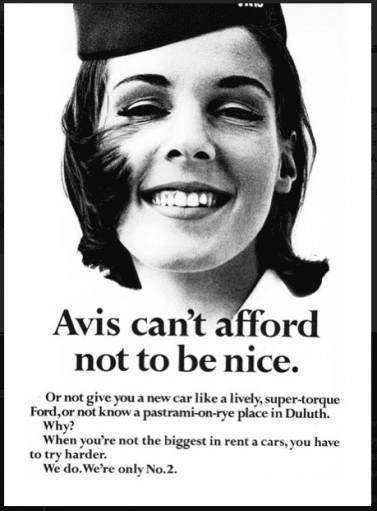
They didn’t just admit their second-tier market share, they advertised it.
In fact, they didn’t just advertise it, they made it the center of one of the most successful campaigns ever run :
“We’re number two. We try harder.”
This is the original ad, written by Paula Green of Doyle Dane Bernbach in 1962:
Subsequent ads tied their number two status to specific benefits:
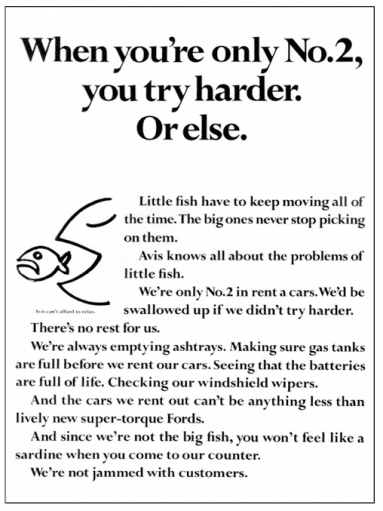
The campaign (preserved as a Project Re:brief here) turned into a strategy for the whole business – and narrowed Avis’s market-share gap with Hertz from 61-29 to 49-36 between 1963 and 1966, according to a 2013 history of the campaign. It stayed their line for fifty years, until 2012. (That in itself is insane: how many ad lines last for fifty years?)
2) Volkswagen Beetle embraces the obvious.
In a world where all cars looked like this:

How do you introduce a car that looked like this?:

Well, what you don’t do is pretend it’s beautiful.
They could have ignored the design but, let’s face it, how the Beetle LOOKED would always be the elephant in the room.
So instead of ignoring it, they made it the hero of the entire campaign. And the rest is advertising history:
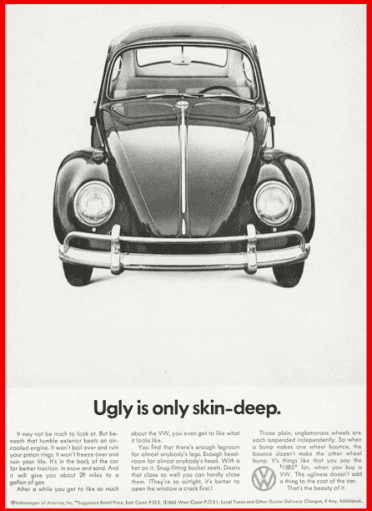
Google “Classic VW Beetle ads” and you’ll see dozens and dozens of these terrific, insanely honest ads (also done by DDB in their heyday).
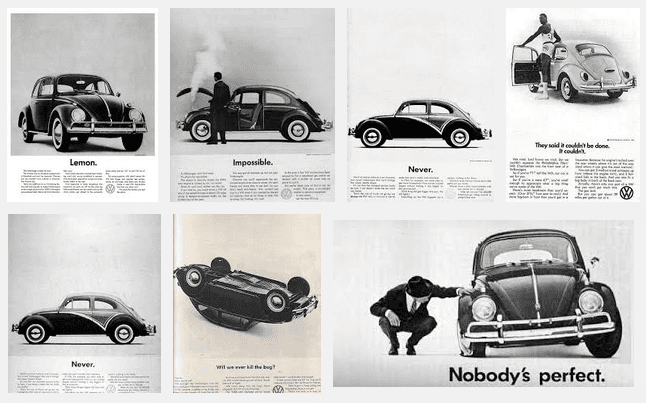
Another favorite is an early example of news-jacking:
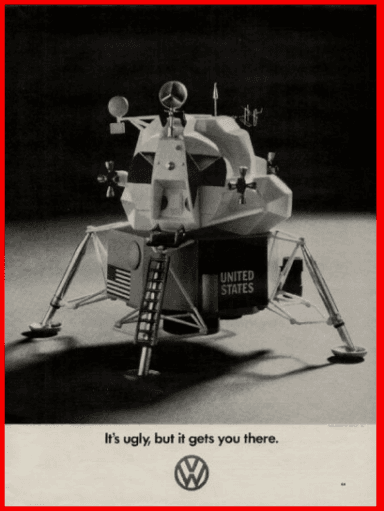
What VW and DDB did here is not just re-invent car advertising and create one of the most successful car brands in history. They also sowed the seeds of a distinctive brand that would pay dividends for decades (and is still paying them today). VW is a likable, fun, self-effacing car brand — and attained that without sacrificing brand values like quality and integrity. (Honest advertising backfires when the honesty stops at the ad: the US EPA’s list of vehicles fitted with emissions defeat devices includes the 2013 to 2015 diesel Beetle.)
3. A real estate agent gets real.
The rose-tinted property descriptions of comically optimistic real estate agents have become a cultural cliché. So it’s surprising and refreshing to see an honest ad for a crappy little flat.
In this example of Insane Honesty, posted on Zoopla by Harvey Residential, a Hoxton flat is described as:
“Not a very nice one bedroom flat but like the budgie it’s cheap…”
That ‘not very nice’ has just entered my Copywriting Hall of Fame right alongside ‘Buy More Beef You So-and-Sos’.
The accompanying photos support the copy:
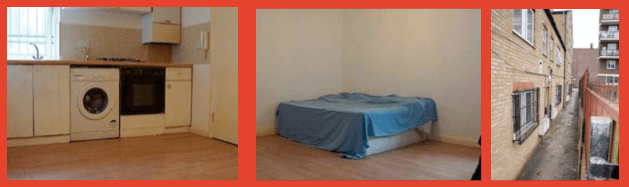
The ad got lots of press coverage and the flat got a lot of attention – from the right people: people who wanted to live in Hoxton but couldn’t afford a nice flat there. As Warren George, the director of Harvey Residential put it, “There is no point giving people the wrong message.”
Amen.
4. A budget hotel celebrates its dirty linen.
I LOVE this one.
When the Hans Brinker, a not-very-nice budget hotel in Amsterdam, added lots of beds (not rooms, beds) and raised prices, they knew they needed a special kind of marketing. Fortunately, they chose a special kind of ad agency, Kessels Kramer.
The hotel looked like this:
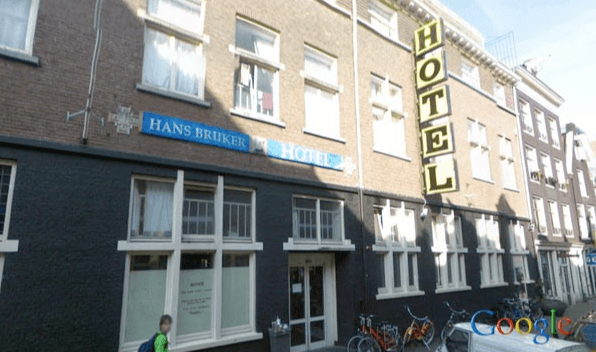
And the rooms looked like this:

The campaign is a terrific example of the first principle of Insane Honesty: take your weakest points and put them in the spotlight.
There are lots and lots of great executions to choose from (here’s a Google-trove) but here are a few favorites:
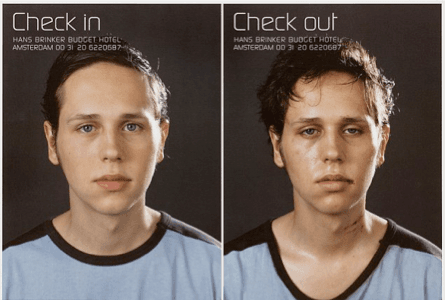
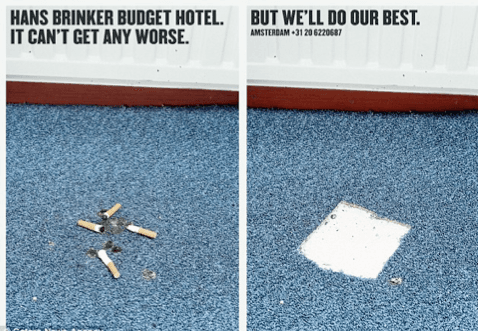
And just to show that the campaign attracts ideal prospects (young, stoned people who don’t care about hotel frills and aren’t likely to be actually sleeping in the room anyway), here’s a fairly typical Trip Advisor review:
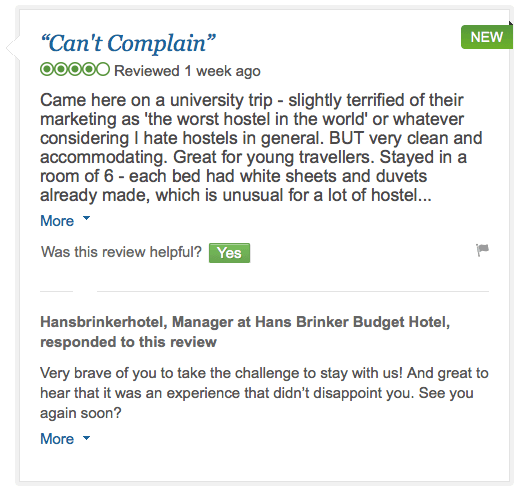
Just goes to show you the power of managing expectations (so you can slightly exceed them). And I love their response.
5. An ugly building tells it like it is.
So you’ve bought a big office building in a nice-enough neighborhood but it looks like this:

Maybe you only have enough money to do up the lobby but not enough to slap on that skin-deep, glass cladding developers seem to love.
Well, you could ignore the look of the building and market its location, price and amenities. Or you could go the insanely honest route:
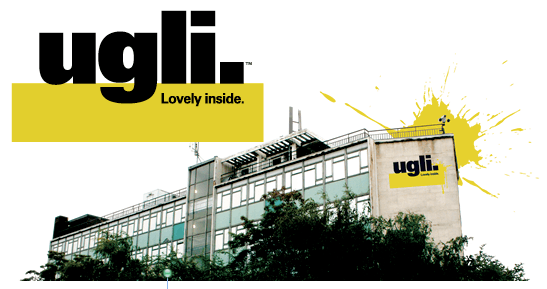
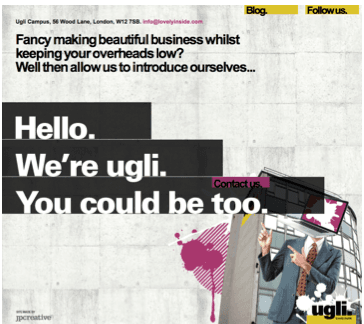
They actually called the building Ugli — and slapped it on the outside in 20-foot high letters.
In short: they had FUN attracting their best prospects without worrying about alienating their worst (companies that want their building to say who they are).
Nice website too (by JP Creative):
6. Three, no four, more examples
I don’t know why, but I wanted the number 6 in the headline of this post, so I’m smuggling three , no four, more examples here, with a bit less discussion (you get the idea anyway):
[UPDATE: even MORE BONUS examples at the same low price…]
Thomson Holidays tells it like it is
Back in 1996, Richard Bowden-Doyle (then Deputy MD of Thomson Tours, later our Chairman), decided to be insanely honest in every hotel description in Thomson’s brochures.
As part of their ‘Tell It Like It Is’ initiative, they printed the bad reviews and ratings, along with negative comments about specific properties. No one had ever done that before.
The result: massive publicity; a leap to 30% market share; a major uplift in customer satisfaction scores (we’ve written about this effect of managing expectations before) — oh, and a big, fat promotion for Richard.
Hyposwiss skips the baloney
Bank ads are notoriously slimy – full of unctuous, sycophantic drooling that disguises an utter disdain for actual customer service.
So this insanely honest campaign by Hyposwiss is refreshing as hell:
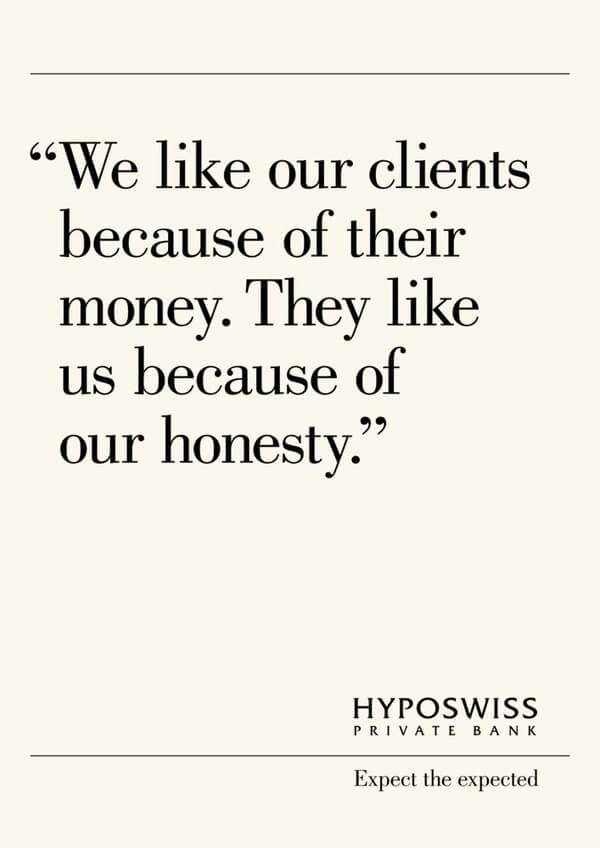
My favorite headline of the campaign says that if you want to double the money in your account, you should “put twice as much in it.” See more of the ads here. (The bank closed in 2013, so don’t try it.)
TransferWise goes all transparent
Transferwise (renamed Wise in 2021) published real reviews on their home page — even when there are negative things in them. Here’s one:
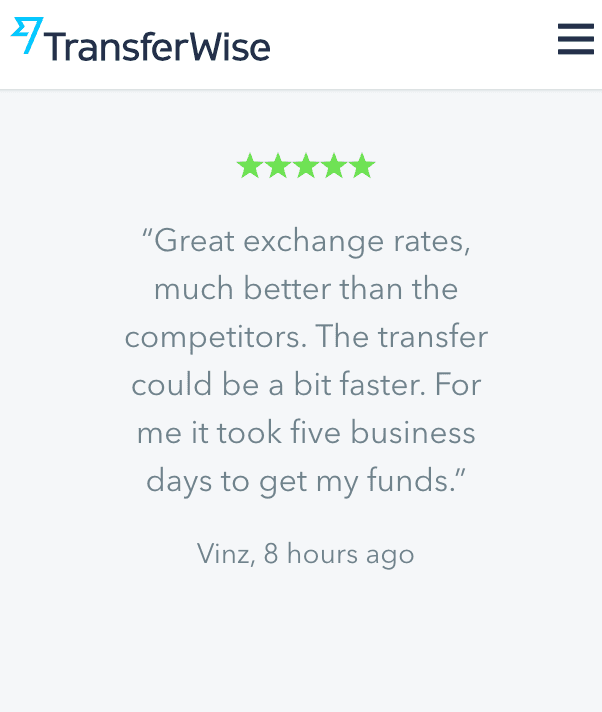
See how compelling that is? If you really, really want to transfer money right away, TransferWise may not be your best option. If you don’t mind waiting, they’ll save you a lot of money. So they say so, winning your trust immediately. That’s how Insane Honesty works.
Ricky Gervais does a celebrity endorsement for Optus & Netflix
Great script. Great performance.
Strictly speaking (and why speak if not strictly?), this isn’t really Insane Honesty — it’s comedy. But it touches on the truth behind every celebrity endorsement in a way that hits so close to the bone, it’s kind of insane. And I like it.
[Thanks for this one, Harry Kapur]:
https://www.youtube.com/watch?rel=0&showinfo=0&v=waymSm5lP-k&feature=youtu.be
Pizza Hut in Australia launches a Vegemite Crust pizza:
If you haven’t tasted Vegemite (or Marmite), their faces say it all: [Damn: the Pizza Hut PR team removed the video and squashed all online trace of it. Bummer. Well, what it showed was people taking their first bites of the new pizza with the, let’s say ‘polarizing’ ingredient (a brown, salty, yeast-extract… you don’t want to know), then grimacing with disgust. Funny. Honest. Surprising. And now dead.]
Nordnet breaks the fourth wall:
(Thanks to Jo Burkhart for this:)
Three reasons you don’t want to adopt Eddie the Terrible.
The Humane Society of Silicon Valley wrote this hilariously honest ad to find a home for Eddie the Terrible.
Thanks to Ann Handley for this — and read her post on why she loves it so much.
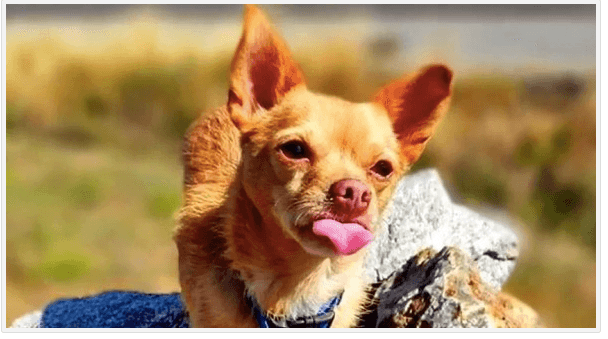
A typical chunk of copy tells you that Eddie “has never actually attacked another dog” but “hasn’t ruled out the possibility”, and that he goes from zero to Cujo in .05 seconds.
[UPDATE, November 2026: three newer examples, two of them B2B, at the same low price…]
Malört turns “fermented back sweat” into a sales pitch
Jeppson’s Malört is a bitter Chicago spirit that drinkers have compared to “fermented back sweat”, and the brand embraced it, PR Daily reported in July 2026. Since CH Distillery bought it in 2018, distribution has grown to 37 states and sales have quadrupled.
PostHog tells you when to buy the competitor
PostHog’s comparison page tells readers that rival Sentry “remains stronger for deep performance tracing”, and its October 2026 write-up admits that “you will, occasionally, lose a deal on your own website”. In fiscal 2025, about 10% of the 30,000-plus visitors to its head-to-head pages later signed up, against about 2.5% for its other blog posts. Those are PostHog’s own numbers, from people already closer to buying.
Cloudflare publishes its worst day
On November 18, 2025, Cloudflare’s network failed for about three hours. Chief executive Matthew Prince’s post-mortem called it “Cloudflare’s worst outage since 2019” and explained that the team had at first wrongly suspected an attack. We have no numbers on what that candor does for renewals.
What have we learned here about honest advertising?
I don’t know about you, but I’ve learned that:
Insane Honesty is surprising
Because marketing is so rarely completely honest.
Insane Honesty is charming.
We like people who make fun of themselves more than we like braggarts.
Insane Honesty alienates the people you want to alienate.
Face it: they were never going to buy no matter what your marketing said.
Insane Honesty attracts your ideal prospects.
The ones who are far more likely to buy.
Insane Honesty builds trust.
And that’s maybe the single hardest thing to build in a marketing context.
Insane Honesty signals confidence.
Without a doubt, the most important signal you can send.
Insane Honesty focuses you on battles you can win.
Not a bad place to focus if you’ve got limited resources (and who doesn’t?).
The trust point now has data behind it. In six experiments published in Psychology & Marketing in 2024, Kale and Sayin found that self-deprecating ads raised brand trust when the attribute being mocked mattered less to consumers. So a software vendor can joke about its ugly interface and shouldn’t joke about its security.
Buyers are also finding the flaws without your help. In follow-up interviews with about 30 executives for Pretzl’s 2026 Buyer Group Index, run with the ANA and NewtonX, 60% said most buyer research happens outside a vendor’s visibility.
Got any great examples to share?
I’d love to hear about them.
If you suspect your buying groups already know your worst side, the Buyer Group Index assessment takes 15 minutes.
Common questions
What is honest advertising?
Honest advertising is marketing that openly names a real weakness in a product or company and uses it as part of the argument for buying. Avis advertising its second-place market share in 1962 is the classic example. It goes further than truth in advertising, which is the legal requirement that claims be accurate.
What are some examples of honest ads?
Well-known honest ads include Avis’s “We try harder”, Volkswagen’s “Lemon” and “Think small”, and the Hans Brinker hotel’s “worst hotel in the world” campaign. More recent ones include Jeppson’s Malört embracing customer insults, PostHog’s comparison pages that say where competitors are stronger, and Cloudflare’s public post-mortem of its November 2025 outage.
Does honest advertising work?
Honest advertising can work when the flaw is one buyers can live with. Six experiments published in Psychology & Marketing in 2024 found self-deprecating ads raised brand trust when the criticized attribute mattered less to consumers. Single-brand results point the same way, such as Malört’s 26% five-year growth rate against 2.7% for US distillers, but those are not controlled tests.
Should B2B companies admit their weaknesses in marketing?
Yes, when the weakness is already known and doesn’t touch the reason people buy. B2B buyers research out of sight: in follow-up interviews for Pretzl’s 2026 Buyer Group Index, 60% of executives said most buyer research happens outside vendor visibility. Naming the limit first, and saying who should buy elsewhere, mostly costs you deals you were unlikely to keep.
More of this in your inbox

Doug KesslerOriginal author
Published in:
Subscribe to our updates.
Get fresh marketing insights rooted in customer science to help you stay ahead.
Relatedcontent
Beyond the briefing: how the best technical media conversations build lasting B2B credibility
Discover how technical media conversations at Pretzl Connect helped sharpen company narratives, inspire useful content and build lasting credibility in B2BRead more

From Leads to Buying Groups: The Next Evolution of B2B Marketing
Why buying group marketing is fundamentally changing the way we go to market, personalise experiences and measure success.Read more

Is Germany ready to sell to today’s buying groups?
How German GTM organizations are adapting to modern B2B buying groups.Read more