
A former reporter in California, Alex Gronke is Pretzl's U.S.Content Director and designated envoy to non-human intelligences.
View Alex Gronke’s postsPublished in:
5 mins read
A conversation with Brent Adamson: Why the new customer journey is really about self-confidence
The author of The Framemaking Sale explains how decision complexity and information overload have shifted the buying environment
 Alex Gronke|Editorial Director
Published on:December 5, 2025
You don't need to have read The Challenger Sale to have been impacted by it.
What was a novel insight in 2012 is now received wisdom: the most valuable and productive B2B sales conversations don't come from differentiating on product features, but from educating customers on big-picture challenges and opportunities they've underestimated.
The problem, 13 years later, is that customers are drowning in a surplus of big ideas. Nearly two decades of "The smartness arms race" (as Brent calls it), have left buyers overloaded, overwhelmed, and perhaps most importantly, uncertain.
The Framemaking Sale is Brent Adamson's answer to the new buying landscape. It's about why the most effective Sales and Marketing teams no longer optimize for education, but for buying confidence.
We invited Brent to unpack this idea with Pretzl Executive Director of Product, Jon Busby. This post is a quick taster – watch the full conversation below for the good stuff.
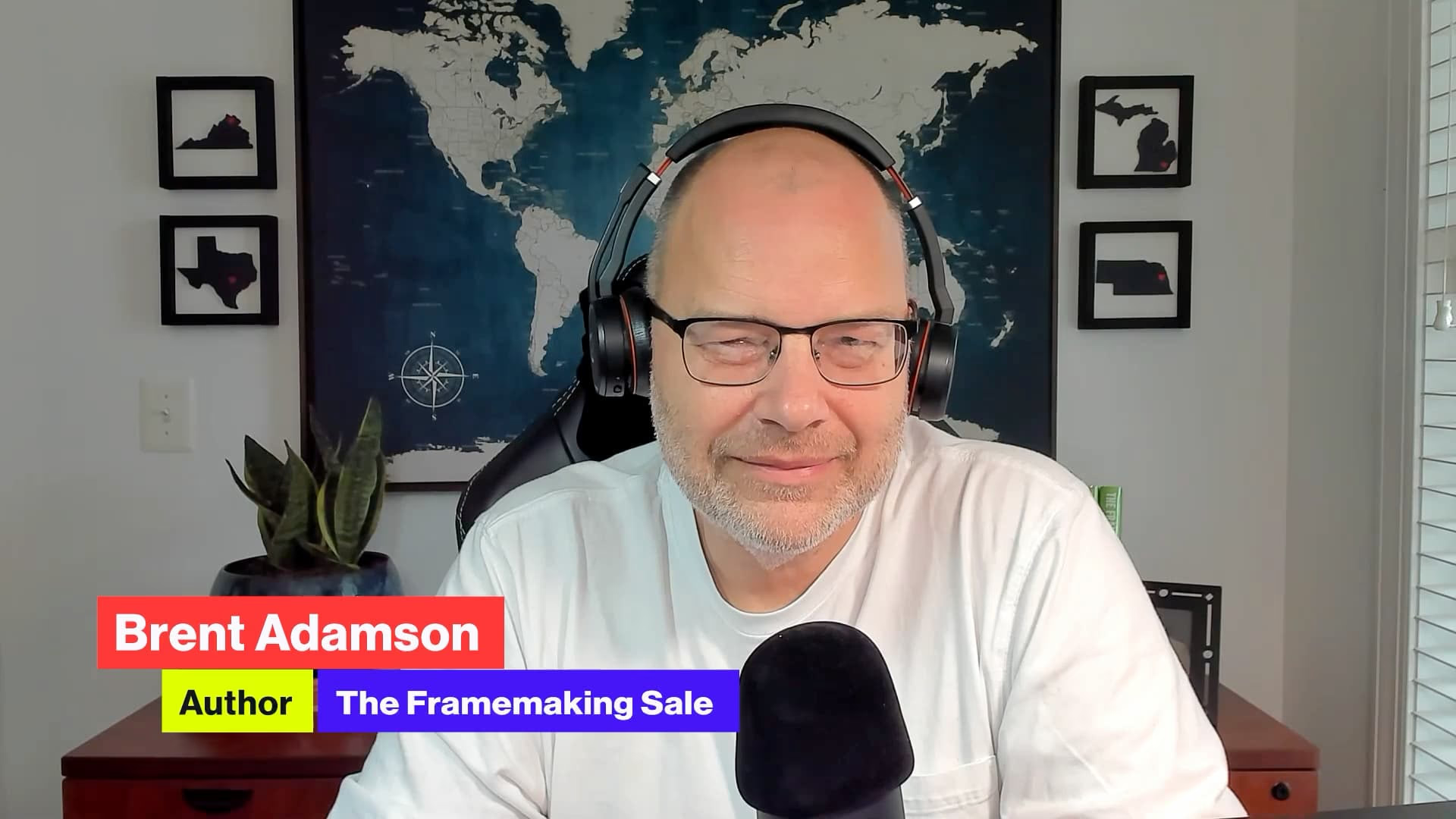
The power of self-confidence in B2B buying
Just like The Challenger Sale before it, The Framemaking Sale is grounded in observable data.
Brent (together with co-author Karl Schmidt) built a research engine to analyze how a multitude of different factors impact the best B2B buying journeys — which Brent defines as high-quality, low-regret deals.
One factor towered over everything else: buyer confidence that they'd made the right decision on behalf of the company.
Specificity matters here. This isn't confidence in your brand, or product, or content. It's self-confidence in their own decision.
And that kind of self-confidence is something very few go-to-market strategies explicitly solve for.
Solving for self-confidence
When most Sales and Marketing leaders hear "customer confidence", they apply it inwardly, and double down on confidence-building tactics like brand work, product marketing, thought leadership and case studies.
But when Brent broke down the actual drivers of confident decisions, they were (unsurprisingly) far more about how buyers see themselves. Questions like:
Answering those questions is a very different brief for sales and marketing — that's about coaching and guiding buyers in ways that structures their thinking (rather than adding to the cacophony of ideas and information).
The Framemaking Sale
The heart of The Framemaking Sale is showing up not just as a seller, but as a guide — someone who helps customers make the best decision they can, in the least amount of time, even if that decision isn't you.
That's a hard shift for Sales and Marketing teams who've spent years battling declining effectiveness and rising pressure to prove impact.
But buying has fundamentally changed. With decision complexity, stakeholder alignment, and information overload shaping every deal, the most valuable thing we can optimize for now is buyer self-confidence — their ability to feel capable, aligned and ready to move forward.
The Buyer Group Index report adds a GTM perspective to this challenge, examining where teams understand their buying groups but struggle to influence how decisions are made.
Teams that fail to solve for self-confidence that will keep watching deals stall, shrink or disappear. But teams that do will earn something far more durable than short-term wins: long-term trust.
Brent referenced a conversation with Bryan Smith, CEO of Expedient, that illustrates the long-term goals of optimizing for self-confidence:
"If I'm going to lose, I want to lose early. I want to help the customer make a great decision they feel good about, even if it's not me. Because the next time they need to make a decision, I want to be the first one they call. They're going to remember how we showed up, how we engaged, how we made them feel about themselves. That's how we win. That's how we win in the long term."
More of this in your inbox
Published in:
Subscribe to our updates.
Get fresh marketing insights rooted in customer science to help you stay ahead.
Relatedcontent

Everyone Sounds Certain Now. Who’s Actually Right? B2B Marketing in the Age of AI
AI makes B2B marketing sound certain. Pretzl CEO Greg Salmon explains why lead scores and attribution need testing and how evidence earns buyer confidence.Read more

Does the anti-AI bad writing trend work in B2B?
As a reaction to slick AI speak, ‘bad’ writing is having a moment. Here, Rebecca Ley looks at whether this trend works in the world of B2B.Read more

Pretzl named a top global and US B2B agency by B2B Marketing
Pretzl named a top ten US and Global B2B Agency by B2B Marketing in two new 2026 benchmarking reports.Read more